

Being a little braver…

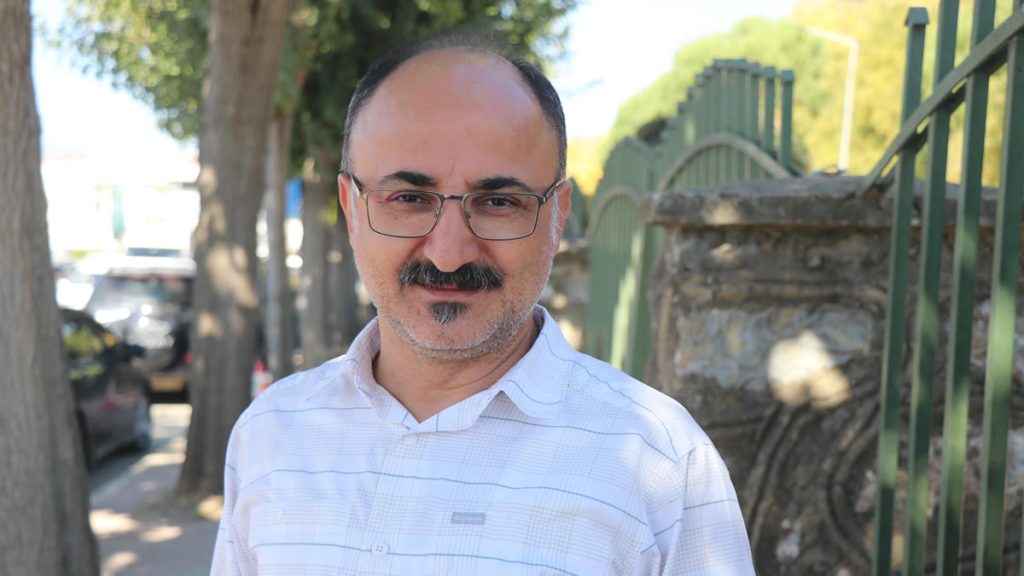
We first met him through his article "Architects of Conservation," prompted by landscape architect Teoman Akçalı. It was a professional and industry magazine, but he convinced us there was hope in academia. Associate Professor Dr. Mustafa Artar is a highly social person. We won't list them all, but Artar is also an active academician in several organizations, including PEMDER, the Bartın Pedaldaşlar Bicycle Club Association President, a member of the Bartın Search and Rescue Association, and an AFAD Support Volunteer. We present this conversation, which touches on both the highs and lows, but also the highs and lows.
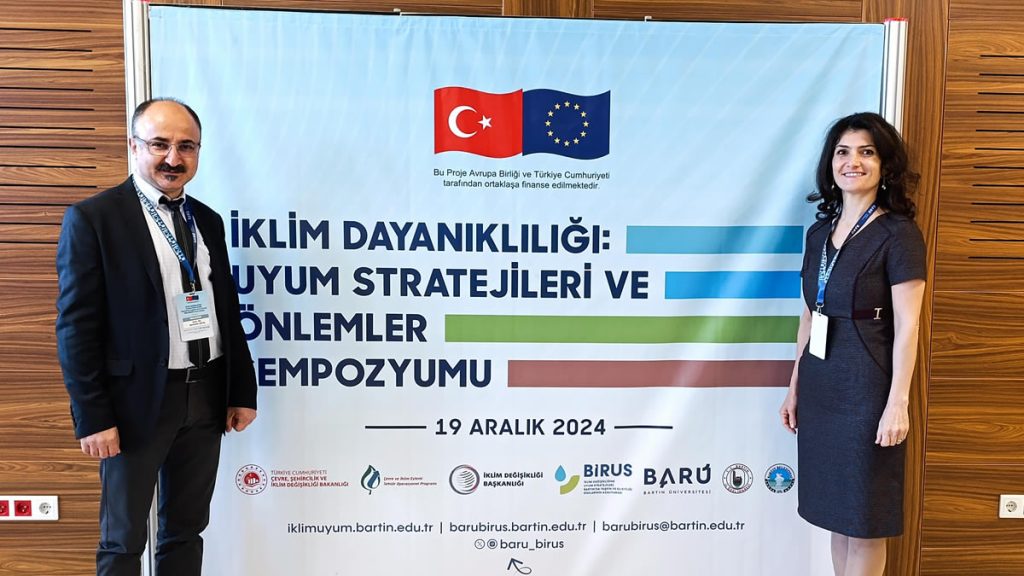
Assoc. Prof. Dr. Mustafa Artar and Dr. Lecturer Aylin Alişan Yetkin worked together on the EU project.
To be fluent in at least one foreign language…
After graduating from TED Karabük College, I was accepted into the Department of Landscape Architecture at Çukurova University's Faculty of Agriculture in 1994. When I first started, our department head was Prof. Dr. Güngör Uzun. Like our other professors, our professor had a large collection of textbooks and supplementary materials. What really caught my attention was always seeing Landscape Architecture Magazine on his desk. He would translate and take notes from the current issue. After reading the magazine, he would return it to the department's small library, and we would browse through it to keep up with current events.
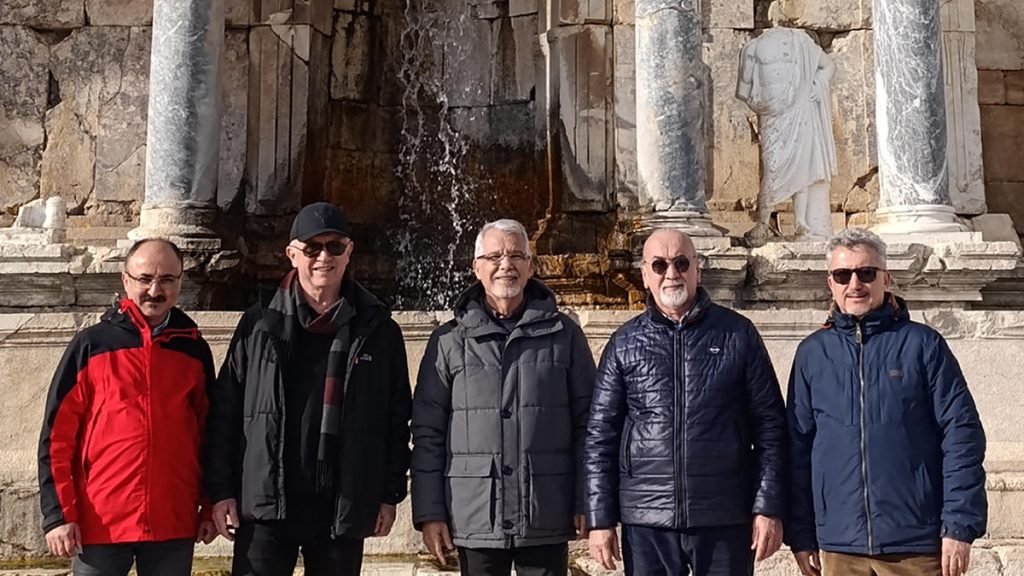
From left to right: Assoc. Prof. Dr. Mustafa Artar, Prof. Dr. Adnan Uzun, Prof. Dr. Erhan Vecdi Küçükerbaş, Prof. Dr. Oğuz Yılmaz, Prof. Dr. Veli Ortaçeşme
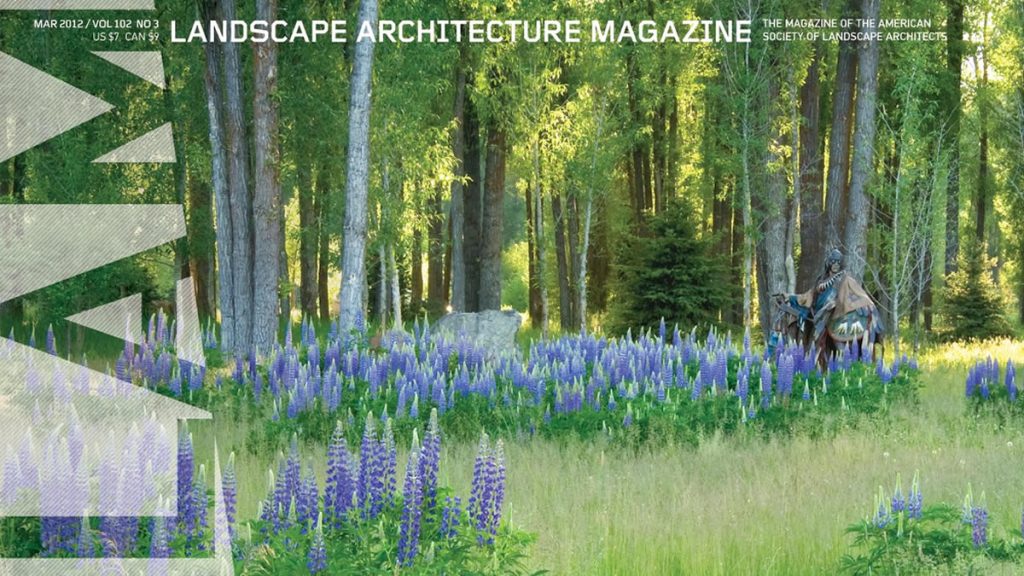
Landscape Architecture Magazine
I was introduced to Landscape Architecture Magazine in my freshman year. At a time when publications were scarce in Türkiye, I learned about its importance through Landscape Architecture Magazine. In later years, Professor Türker Altan, along with colleagues fluent in English or German, assigned me to conduct research and international liaison at Çukurova University. Professor Türker instilled in us a love of research and fieldwork.
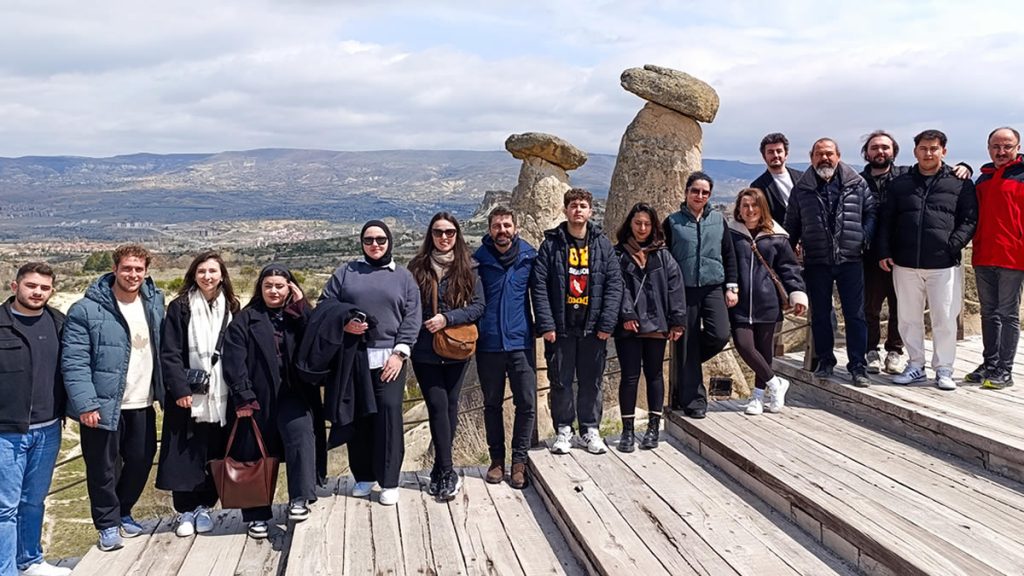
Cappadocia trip for project work within the scope of PEM 326 Project Design Project-6 course
Being a teacher is a guide for students…
I completed my internship at the Istanbul Metropolitan Municipality Parks and Gardens Directorate in 1997. During my internship, the Istanbul Metropolitan Municipality Parks and Gardens Directorate was running a 1 million tree campaign for Istanbul. As an undergraduate, I participated in the project design phase of the campaigns and worked on road planting. Interestingly, I can't recall the name of the company right now, but even my insurance application was made to an Italian company after my internship. At that time, a large amount of imported trees were imported into Türkiye (1997-1998). Later, following an offer from my professor, I began my master's degree. I also passed the assistantship exam that same year and began working in 1998. I completed my master's and doctorate in Çukurova University and joined the Department of Landscape Architecture at what was then Zonguldak Karaelması University / Bartın Faculty of Forestry in 2006, where I currently serve as an Associate Professor.
Places where landscape architecture is unknown…
For example, a report on a mining site lists various plants... Are the plants listed in the report accurate or not? How and from whom will those who will evaluate this information? Landscape architects still don't think about planting. If a first-year student were to say this, I'd say, "Get out of here." But it's a fact... Especially when it comes to expert witnessing, courts, prosecutors, and judges don't understand that similar issues concern landscape architecture. Because if we're not the expert witnesses, someone else will come forward to speak on the matter. This is a significant professional shortcoming. Our professional chamber has work to do on this issue. It's the responsibility of academia to bring the profession into various scientific processes and new realms.
Looking at the geography of Anatolia…
It might sound like a cliché, but our BARÜ-EU project on climate change adaptation involves the issue of rainwater management. There are rain gardens… While our people in Anatolia collected water from gutters, our grandmother watered her vegetables with a watering can. Now we're going back and discussing how they captured the water and what they did to collect the rain. To understand this, we need to look at the geography of Anatolia.
Living in peace with nature…
If we're going to scientifically re-discuss rain gardens, swales, and how we can connect groundwater with water, we must return to Anatolia. We must re-evaluate all our accumulated knowledge on living in harmony with nature. Therefore, I believe the use of concepts prefixed with ecology, such as "ecological design," is crucial. Furthermore, I won't delve into their context. I won't even delve into whether they're used correctly, but simply having them circulate in the language is incredibly beneficial. One thing is certain: if we strive to live in harmony with nature, humanity will be much better off.
We cannot prevent it by designing a villa garden
I served in a professional organization for a long time, approximately 12 years. We established a representative office in Bartın. My time on the PMO board was spent fighting for nature and the environment. It continues to be so. Because landscapes are being intervened in across the country. We can't prevent these interventions by designing villa gardens. It's a good idea to develop the theoretical foundation and raise awareness. However, discussing the importance of our profession for public spaces based on where the tent will be set up after an earthquake isn't enough.
A little more courageous things should have been said
The earthquake in Istanbul brought these issues back to the forefront, but we couldn't have landscape architects appearing on television and explaining what would happen. The Gezi Park protests were still very much on the national agenda. It's something that has a place in our country's history. We discussed this internally, but we couldn't voice it. There could be various reasons for this, of course. But the academy should have been a little more courageous in expressing certain things. I think the language used today by even former chamber directors is a bit of a rote language. Unfortunately, we've become a body that believes so much in the importance of organization, yet fears it so much.
I want it to have a transformative effect
That's why I find the organization of the PEMDER Landscape Architecture Education and Science Association valuable. First of all, the organization doesn't operate through names... For example, this association has a student organization called UNIPEM. I've taken on a role in its coordination. Currently, this is a student organization with representatives from all 43 universities in Türkiye. They're not rivals. They're discussing issues with each other and trying to address them. It's in its infancy right now, but I believe it will have a transformative impact over time.


Being a little braver…
We first met him through his article "Architects of Conservation," prompted by landscape architect Teoman Akçalı. It was a professional and industry magazine, but he convinced us there was hope in academia. Associate Professor Dr. Mustafa Artar is a highly social person. We won't list them all, but Artar is also an active academician in several organizations, including PEMDER, the Bartın Pedaldaşlar Bicycle Club Association President, a member of the Bartın Search and Rescue Association, and an AFAD Support Volunteer. We present this conversation, which touches on both the highs and lows, but also the highs and lows.
Assoc. Prof. Dr. Mustafa Artar and Dr. Lecturer Aylin Alişan Yetkin worked together on the EU project.
To be fluent in at least one foreign language…
After graduating from TED Karabük College, I was accepted into the Department of Landscape Architecture at Çukurova University's Faculty of Agriculture in 1994. When I first started, our department head was Prof. Dr. Güngör Uzun. Like our other professors, our professor had a large collection of textbooks and supplementary materials. What really caught my attention was always seeing Landscape Architecture Magazine on his desk. He would translate and take notes from the current issue. After reading the magazine, he would return it to the department's small library, and we would browse through it to keep up with current events.
From left to right: Assoc. Prof. Dr. Mustafa Artar, Prof. Dr. Adnan Uzun, Prof. Dr. Erhan Vecdi Küçükerbaş, Prof. Dr. Oğuz Yılmaz, Prof. Dr. Veli Ortaçeşme
Landscape Architecture Magazine
I was introduced to Landscape Architecture Magazine in my freshman year. At a time when publications were scarce in Türkiye, I learned about its importance through Landscape Architecture Magazine. In later years, Professor Türker Altan, along with colleagues fluent in English or German, assigned me to conduct research and international liaison at Çukurova University. Professor Türker instilled in us a love of research and fieldwork.
Cappadocia trip for project work within the scope of PEM 326 Project Design Project-6 course
Being a teacher is a guide for students…
I completed my internship at the Istanbul Metropolitan Municipality Parks and Gardens Directorate in 1997. During my internship, the Istanbul Metropolitan Municipality Parks and Gardens Directorate was running a 1 million tree campaign for Istanbul. As an undergraduate, I participated in the project design phase of the campaigns and worked on road planting. Interestingly, I can't recall the name of the company right now, but even my insurance application was made to an Italian company after my internship. At that time, a large amount of imported trees were imported into Türkiye (1997-1998). Later, following an offer from my professor, I began my master's degree. I also passed the assistantship exam that same year and began working in 1998. I completed my master's and doctorate in Çukurova University and joined the Department of Landscape Architecture at what was then Zonguldak Karaelması University / Bartın Faculty of Forestry in 2006, where I currently serve as an Associate Professor.
Places where landscape architecture is unknown…
For example, a report on a mining site lists various plants... Are the plants listed in the report accurate or not? How and from whom will those who will evaluate this information? Landscape architects still don't think about planting. If a first-year student were to say this, I'd say, "Get out of here." But it's a fact... Especially when it comes to expert witnessing, courts, prosecutors, and judges don't understand that similar issues concern landscape architecture. Because if we're not the expert witnesses, someone else will come forward to speak on the matter. This is a significant professional shortcoming. Our professional chamber has work to do on this issue. It's the responsibility of academia to bring the profession into various scientific processes and new realms.
Looking at the geography of Anatolia…
It might sound like a cliché, but our BARÜ-EU project on climate change adaptation involves the issue of rainwater management. There are rain gardens… While our people in Anatolia collected water from gutters, our grandmother watered her vegetables with a watering can. Now we're going back and discussing how they captured the water and what they did to collect the rain. To understand this, we need to look at the geography of Anatolia.
Living in peace with nature…
If we're going to scientifically re-discuss rain gardens, swales, and how we can connect groundwater with water, we must return to Anatolia. We must re-evaluate all our accumulated knowledge on living in harmony with nature. Therefore, I believe the use of concepts prefixed with ecology, such as "ecological design," is crucial. Furthermore, I won't delve into their context. I won't even delve into whether they're used correctly, but simply having them circulate in the language is incredibly beneficial. One thing is certain: if we strive to live in harmony with nature, humanity will be much better off.
We cannot prevent it by designing a villa garden
I served in a professional organization for a long time, approximately 12 years. We established a representative office in Bartın. My time on the PMO board was spent fighting for nature and the environment. It continues to be so. Because landscapes are being intervened in across the country. We can't prevent these interventions by designing villa gardens. It's a good idea to develop the theoretical foundation and raise awareness. However, discussing the importance of our profession for public spaces based on where the tent will be set up after an earthquake isn't enough.
A little more courageous things should have been said
The earthquake in Istanbul brought these issues back to the forefront, but we couldn't have landscape architects appearing on television and explaining what would happen. The Gezi Park protests were still very much on the national agenda. It's something that has a place in our country's history. We discussed this internally, but we couldn't voice it. There could be various reasons for this, of course. But the academy should have been a little more courageous in expressing certain things. I think the language used today by even former chamber directors is a bit of a rote language. Unfortunately, we've become a body that believes so much in the importance of organization, yet fears it so much.
I want it to have a transformative effect
That's why I find the organization of the PEMDER Landscape Architecture Education and Science Association valuable. First of all, the organization doesn't operate through names... For example, this association has a student organization called UNIPEM. I've taken on a role in its coordination. Currently, this is a student organization with representatives from all 43 universities in Türkiye. They're not rivals. They're discussing issues with each other and trying to address them. It's in its infancy right now, but I believe it will have a transformative impact over time.

 Turkish