

Colon

Industry members are well-acquainted with Abullah Okul. Okul is Chairman of the Board of Gaye Ornamental Plants and also Chairman of the Board of Yalova Garden Inc. We spoke with Abdullah Okul, who has unique ideas on sectoral issues, about the Landscape Istanbul Fair and the SÜSBİR General Assembly. Whether or not one agrees with Okul's ideas is a separate matter, but his striking and direct statements are noteworthy. We present them for your consideration.
Let's look carefully around us, in Europe. This sector, whose history stretches back fifty years, will undoubtedly have a trade fair. Without debating the whys and wherefores, I believe the Flower Show, which originated in Yalova, faded after a period of growth, and the industry failed to appreciate its value. When the sector failed to capitalize on this opportunity, all eyes turned to IPM Essen. We've been following IPM particularly closely since we started the trade fair business in Yalova. From what I've seen, IPM has been steadily declining since 2020. However, Antalya Growtech, for example, hasn't seen any decline, and that's quite remarkable.
We met with the IPM team at Essen 2024, and we understand they're also aware of the decline they're experiencing. The shrinkage continues in terms of visitors, exhibitors, and square footage. Participating companies are gradually reducing the square footage they purchase. There are also groups that aren't participating. In other words, it's shrinking numerically in every respect. I think IPM Essen is gradually losing its former charm.
IPM is losing its magic and shrinking. This should be considered normal. There's a general economic crisis in Europe. We have it too. But they're having trouble maintaining relationships with their target markets. They can't overcome the difficulties with European visas. This is absurd, but it's a serious problem for them. In a meeting with officials in Essen, I said, "If I want to come, you won't issue visas." We exchanged glances, saying, "You're right." The situation at IPM is this: They invite people to Essen, but those who want to go can't get visas. While visas aren't granted to those from Türkiye, how will they issue visas to those from the Middle East, the Turkic Republics, and North Africa? They've brought this issue to their attention, but they're apparently struggling to cope, and the problem remains unresolved. For example, they previously announced that they wouldn't raise square meter prices this year. At the last IPM, I personally heard foreign companies saying, "I won't be attending anymore; it doesn't meet my expectations." In other words, besides Europe, the Middle East, the Turkic Republics and our north constitute Türkiye's potential.
If the industry wants it, this fair will happen. Returning to Türkiye and the industry, considering the current economic climate, compared to fairs in previous years, the costs of holding fairs in Istanbul are high. Profit margins for manufacturers and landscapers have shrunk and are shrinking. Everyone is struggling. But we need to find a way to grow Istanbul. This is what I tell everyone who asks me about the fair.
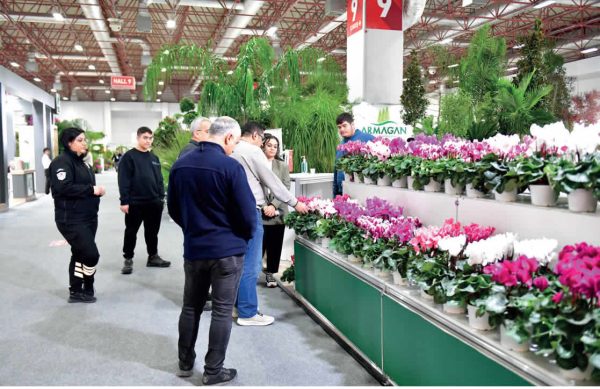
For example, if the fourth edition is successful this year and no exceptionally negative conditions arise in the future, this fair will continue to grow. Of course, it won't replace IPM immediately, but our sector will work together for ten years, and if they want to, why shouldn't it? Because Europeans will come to Türkiye to reach our hinterland. Regarding another point, I don't mean to belittle anyone's goals or efforts, but we have two festivals besides the Istanbul Fair. The Ödemiş Exhibition is in its 22nd year and remains in place. Sapanca has achieved extraordinary success. Such sectoral exhibitions should be available and supported everywhere. However, those who are genuinely interested in the fair choose Peyzaj Istanbul because they experience the feeling and atmosphere of the fair in a corporate environment.
Production costs are rising, sales are limited
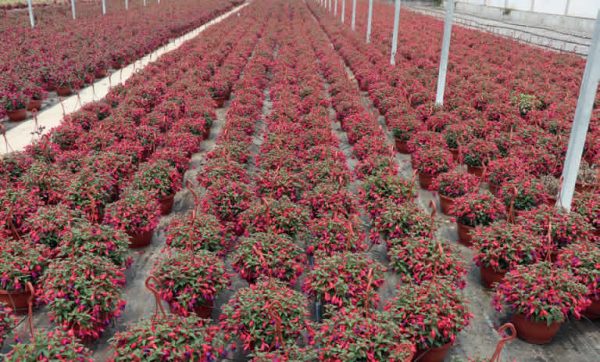
So far, we've discussed the trade fair side of the business. Now, if we look back at the industry itself, there's also the market side, and this year hasn't been good at all. There aren't any projects in sight, either domestically or internationally. Manufacturers' costs are rising. Space is necessary for production, but it's hard to find.
You've found that capital is needed to produce on that large square meter, but this time, it's hard to come by. You need people, but there aren't any workers. You need a market, but there isn't one. Interest rates are high, and no one likes to make payments on time. Our accumulated reserve capital is steadily eroding. In my opinion, those who emerged strong from 2025 won't be easily destroyed from now on, but... Let's hope for the best!
If there was a big demand in our environment…
So, what are elected and appointed officials doing in this sector? Let's make a hypothetical to illustrate the situation. For example, let's say everything is developing positively with neighboring countries, and then the Ministry of Agriculture makes an agreement with Syria and says, "Okay, Syria will buy all its crops from Türkiye," are we in a position to meet this demand? Do we have the production capacity to meet international standards and product volumes? Are we competitive with Europeans in these areas overall? We're not, and it's clear we'll lose that market again over time. Returning to the fair here, the Germans and Europeans are also anticipating this. Therefore, they will come to Istanbul, Türkiye, for this very reason.
The long-term plan and vision of the sector…
What I mean is this: Our industry lacks long-term planning and vision. Our problem is, "I couldn't pay my weekly wage, I couldn't pay my daily wage, I couldn't find the necessary staff, I couldn't pay my check, I couldn't collect from the municipality." This is where our struggle and vision lies. Let's say everything normalizes economically and politically, the problems are over, do we have a Plan B for the future? If we were to say, "Let's think about it and think about it," would we be able to do it? I don't think so. Because there's no institutional structure, and because what exists is based on individuals, it doesn't translate into common sense. For example, when the dust settles, when the Ukraine-Russia war is over, are our production standards, production volumes, and regulations ready to enter the Ukrainian and Russian markets? We speak as if everything is ready. We're discussing fertilizers through this or that brand. Because those topics don't cause any problems. After all, we have speakers, and the chambers of commerce are hosting halls.
We can discuss the general assembly one day and hold elections the second day…
In fact, our economic and political systems do this. I don't comment much on SÜSBİR anymore. We're not a society accustomed to a republic or democracy. Did we ever say, "Let's make two lists, let's make three lists?" We immediately become Fenerbahçe or Galatasaray supporters. We become right-wing or left-wing. If we want to find the best, ideal administration, we'll hold a general assembly on Saturday and an election on Sunday. If we hold the same conversation you have over coffee as two people do at the general assembly on Saturday, we can form a 7+7 team capable of governing there. Since no one will come to our rescue, the struggling sector must find solutions to its own problems.


Colon
Industry members are well-acquainted with Abullah Okul. Okul is Chairman of the Board of Gaye Ornamental Plants and also Chairman of the Board of Yalova Garden Inc. We spoke with Abdullah Okul, who has unique ideas on sectoral issues, about the Landscape Istanbul Fair and the SÜSBİR General Assembly. Whether or not one agrees with Okul's ideas is a separate matter, but his striking and direct statements are noteworthy. We present them for your consideration.
Let's look carefully around us, in Europe. This sector, whose history stretches back fifty years, will undoubtedly have a trade fair. Without debating the whys and wherefores, I believe the Flower Show, which originated in Yalova, faded after a period of growth, and the industry failed to appreciate its value. When the sector failed to capitalize on this opportunity, all eyes turned to IPM Essen. We've been following IPM particularly closely since we started the trade fair business in Yalova. From what I've seen, IPM has been steadily declining since 2020. However, Antalya Growtech, for example, hasn't seen any decline, and that's quite remarkable.
We met with the IPM team at Essen 2024, and we understand they're also aware of the decline they're experiencing. The shrinkage continues in terms of visitors, exhibitors, and square footage. Participating companies are gradually reducing the square footage they purchase. There are also groups that aren't participating. In other words, it's shrinking numerically in every respect. I think IPM Essen is gradually losing its former charm.
IPM is losing its magic and shrinking. This should be considered normal. There's a general economic crisis in Europe. We have it too. But they're having trouble maintaining relationships with their target markets. They can't overcome the difficulties with European visas. This is absurd, but it's a serious problem for them. In a meeting with officials in Essen, I said, "If I want to come, you won't issue visas." We exchanged glances, saying, "You're right." The situation at IPM is this: They invite people to Essen, but those who want to go can't get visas. While visas aren't granted to those from Türkiye, how will they issue visas to those from the Middle East, the Turkic Republics, and North Africa? They've brought this issue to their attention, but they're apparently struggling to cope, and the problem remains unresolved. For example, they previously announced that they wouldn't raise square meter prices this year. At the last IPM, I personally heard foreign companies saying, "I won't be attending anymore; it doesn't meet my expectations." In other words, besides Europe, the Middle East, the Turkic Republics and our north constitute Türkiye's potential.
If the industry wants it, this fair will happen. Returning to Türkiye and the industry, considering the current economic climate, compared to fairs in previous years, the costs of holding fairs in Istanbul are high. Profit margins for manufacturers and landscapers have shrunk and are shrinking. Everyone is struggling. But we need to find a way to grow Istanbul. This is what I tell everyone who asks me about the fair.
For example, if the fourth edition is successful this year and no exceptionally negative conditions arise in the future, this fair will continue to grow. Of course, it won't replace IPM immediately, but our sector will work together for ten years, and if they want to, why shouldn't it? Because Europeans will come to Türkiye to reach our hinterland. Regarding another point, I don't mean to belittle anyone's goals or efforts, but we have two festivals besides the Istanbul Fair. The Ödemiş Exhibition is in its 22nd year and remains in place. Sapanca has achieved extraordinary success. Such sectoral exhibitions should be available and supported everywhere. However, those who are genuinely interested in the fair choose Peyzaj Istanbul because they experience the feeling and atmosphere of the fair in a corporate environment.
Production costs are rising, sales are limited
So far, we've discussed the trade fair side of the business. Now, if we look back at the industry itself, there's also the market side, and this year hasn't been good at all. There aren't any projects in sight, either domestically or internationally. Manufacturers' costs are rising. Space is necessary for production, but it's hard to find.
You've found that capital is needed to produce on that large square meter, but this time, it's hard to come by. You need people, but there aren't any workers. You need a market, but there isn't one. Interest rates are high, and no one likes to make payments on time. Our accumulated reserve capital is steadily eroding. In my opinion, those who emerged strong from 2025 won't be easily destroyed from now on, but... Let's hope for the best!
If there was a big demand in our environment…
So, what are elected and appointed officials doing in this sector? Let's make a hypothetical to illustrate the situation. For example, let's say everything is developing positively with neighboring countries, and then the Ministry of Agriculture makes an agreement with Syria and says, "Okay, Syria will buy all its crops from Türkiye," are we in a position to meet this demand? Do we have the production capacity to meet international standards and product volumes? Are we competitive with Europeans in these areas overall? We're not, and it's clear we'll lose that market again over time. Returning to the fair here, the Germans and Europeans are also anticipating this. Therefore, they will come to Istanbul, Türkiye, for this very reason.
The long-term plan and vision of the sector…
What I mean is this: Our industry lacks long-term planning and vision. Our problem is, "I couldn't pay my weekly wage, I couldn't pay my daily wage, I couldn't find the necessary staff, I couldn't pay my check, I couldn't collect from the municipality." This is where our struggle and vision lies. Let's say everything normalizes economically and politically, the problems are over, do we have a Plan B for the future? If we were to say, "Let's think about it and think about it," would we be able to do it? I don't think so. Because there's no institutional structure, and because what exists is based on individuals, it doesn't translate into common sense. For example, when the dust settles, when the Ukraine-Russia war is over, are our production standards, production volumes, and regulations ready to enter the Ukrainian and Russian markets? We speak as if everything is ready. We're discussing fertilizers through this or that brand. Because those topics don't cause any problems. After all, we have speakers, and the chambers of commerce are hosting halls.
We can discuss the general assembly one day and hold elections the second day…
In fact, our economic and political systems do this. I don't comment much on SÜSBİR anymore. We're not a society accustomed to a republic or democracy. Did we ever say, "Let's make two lists, let's make three lists?" We immediately become Fenerbahçe or Galatasaray supporters. We become right-wing or left-wing. If we want to find the best, ideal administration, we'll hold a general assembly on Saturday and an election on Sunday. If we hold the same conversation you have over coffee as two people do at the general assembly on Saturday, we can form a 7+7 team capable of governing there. Since no one will come to our rescue, the struggling sector must find solutions to its own problems.

 Turkish